Introduction
Picture walking down a corridor at Madison Square Garden — basketball action photography filling every wall on glossy acrylic panels, each image larger than a doorway. Or stepping into a hotel room at MSocial in downtown Manhattan and finding an entire wall covered in a floor-to-ceiling New York City mural, the Charging Bull and Broadway signs rendered in rich, photographic detail across custom Dreamscape wallpaper. What makes that kind of visual impact possible?
Wide format printing. It's the technology behind the oversized graphics that transform ordinary spaces into immersive brand experiences — and it's used across sports venues, corporate offices, hospitality properties, events, and retail environments worldwide.
Here's a complete breakdown of how it works, what it's made of, and where it creates the most impact.
Key Takeaways:
- Wide format printing covers media 18–100 inches wide; beyond 100 inches is super-wide or grand format
- Uses inkjet technology with four main ink types: aqueous, solvent, UV-curable, and latex
- Prints on flexible substrates like vinyl and fabric, and rigid materials like acrylic and aluminum composite
- Applications span sports venues, corporate offices, hospitality, events, and retail
- Outdoor prints can last 3–6 years with proper ink and lamination selection
What Is Wide Format Printing?
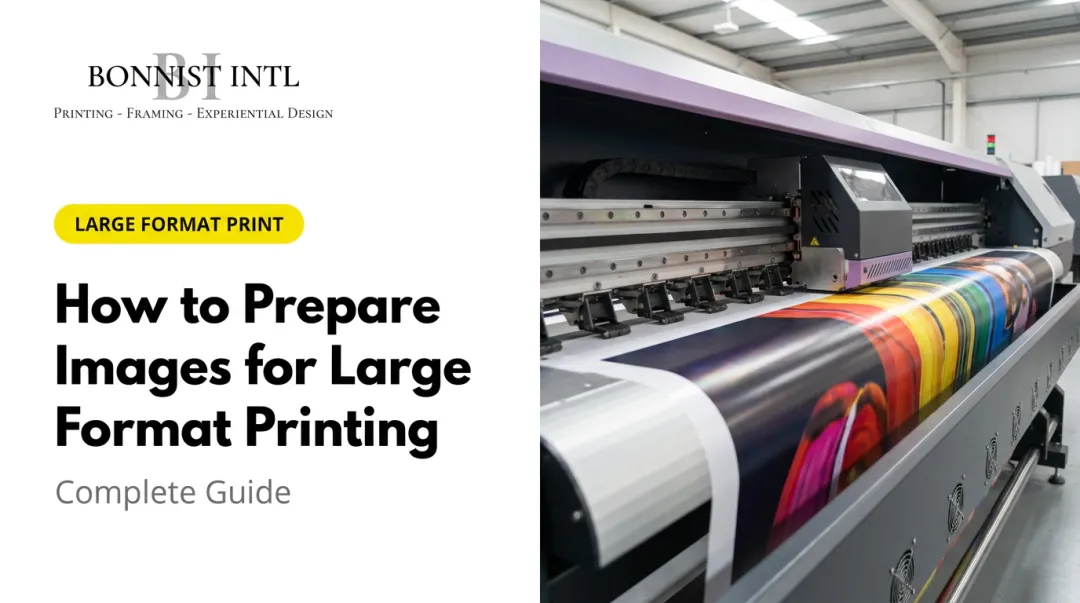
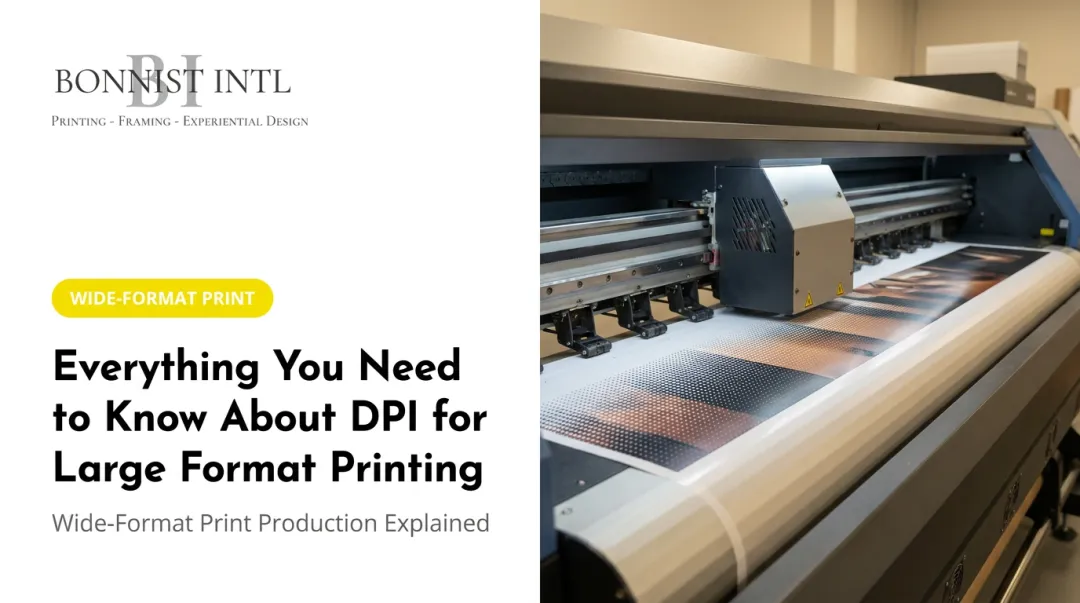
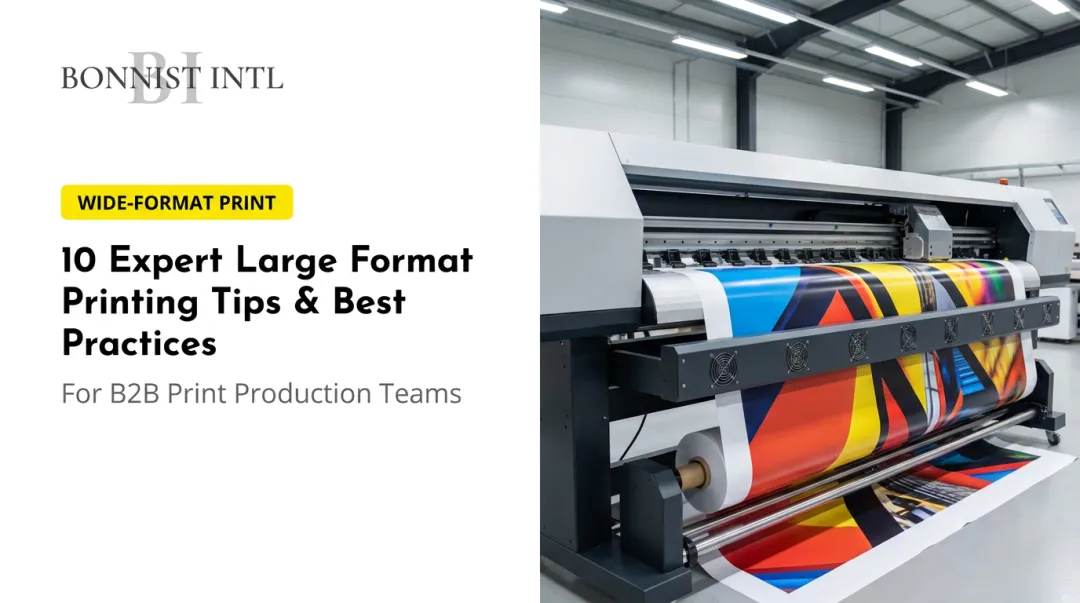
Wide format printing is a specialized production process that uses roll-fed or flatbed printing equipment to produce oversized graphics on media wider than standard office output. The common industry benchmark: 18 to 100 inches in media width. Printers exceeding 100 inches are classified as super-wide or grand format, used for building wraps, billboards, and stadium-scale installations.
HP describes large-format printing as output larger than typical 8×11 or 11×17 sheets, while Canon markets large-format systems supporting up to 60 inches wide — both definitions pointing to the same core category: roll-fed, oversized graphic production that goes far beyond what a standard office printer can handle.both pointing to the same core category of roll-fed, oversized graphic production.
How It Differs from Standard Printing
Three things separate wide format from conventional desktop or commercial offset printing:
- Scale of output — graphics that span entire walls, vehicle surfaces, or arena perimeters
- Roll-based media feeding — continuous printing rather than individual cut sheets, enabling banners, murals, and wraps
- Substrate flexibility — prints on vinyl, fabric, mesh, acrylic, PVC, metal, and specialty materials that standard printers can't touch
A Brief History
Wide format digital printing emerged in the 1990s. Early systems used electrostatic technology, with Xerox among the pioneers. Inkjet eventually became the dominant platform, with HP and Canon advancing the category into today's high-resolution, commercially versatile systems capable of printing on nearly any surface.
Wide Format vs. Large Format vs. Regular Printing
The terminology causes genuine confusion, even among buyers who use these services regularly. Here's the practical breakdown:
| Category | Typical Width | Example Outputs |
|---|---|---|
| Standard (office) printing | Up to 17 inches | Letters, legal documents, tabloid sheets |
| Wide / large format | 18–100 inches | Banners, wall murals, vehicle wraps, retail signage |
| Super-wide / grand format | Over 100 inches | Billboards, building wraps, stadium graphics |
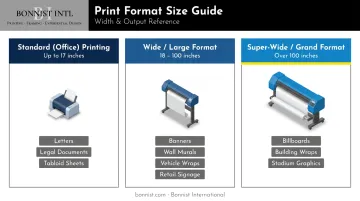
The industry uses "wide format" and "large format" interchangeably. Technically, "wide format" describes the printer's media width capability, while "large format" refers to the category of oversized printed output — but both terms describe the same class of equipment and production.
The distinction that actually matters for buyers is whether the job involves:
- Roll-fed or flatbed production
- Durable specialty inks (solvent, latex, UV-curable)
- Non-standard substrates such as rigid board, fabric, or vinyl
- Finishing steps like lamination, mounting, or cutting
- On-site installation
These requirements fall outside what standard office or commercial printing can deliver — regardless of what the printer is called.
How Wide Format Printing Works: Technologies and Inks
Most wide format printers use inkjet technology, precisely spraying microscopic ink droplets onto the substrate to build high-resolution images at large scale. The substrate, ink type, and curing method determine everything from color vibrancy to outdoor lifespan.
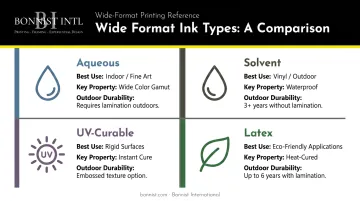
The Four Main Ink Types
Aqueous (water-based) Available in dye (wide color gamut) and pigment (UV-resistant) varieties, aqueous inks are best for indoor prints, fine art reproductions, and coated papers. Outdoor use requires lamination. Bonnist International uses an Epson wide-format system for giclée and fine art printing on paper and canvas, which falls squarely in aqueous territory.
Solvent Petroleum-based solvent inks bond directly to uncoated vinyl and rigid substrates, making them durable, waterproof, and weather-resistant. Roland's Eco-Sol MAX inks adhere to calendered and cast vinyl, banner films, and heat-transfer materials, with stated outdoor durability of 3+ years without lamination.
UV-curable UV-curable inks harden instantly under ultraviolet light rather than air-drying, producing waterproof, vibrant output with the option for embossed textures. They work on non-absorbent materials including plastic, glass, metal, acrylic, and ceramics, making them the preferred choice for rigid substrate printing and specialty surface effects.
Latex Water-based latex inks cure with heat rather than solvents. HP Latex systems are UL GREENGUARD GOLD certified, with outdoor durability up to 3 years unlaminated and up to 6 years with specified 3M films and laminates. They carry a strong sustainability profile with no harsh fumes.
Dye Sublimation
A specialty technology for fabric and textile applications. Inks are heat-transferred directly into the material fibers, producing continuous-tone, photographic-quality output with no surface ink layer. Epson's SureColor F-Series handles large-format dye-sublimation output for this application.
Color and Resolution
Wide format printers use CMYK systems, often extended with additional color cartridges (light cyan, light magenta, orange, green) to broaden color gamut and achieve fine gradients at scale.
Resolution requirements differ from standard printing. Large graphics viewed from across a room or arena floor can use lower effective DPI than close-viewed brochures, with the final setting determined by substrate, viewing distance, and file specifications.
Materials Used in Wide Format Printing
Material selection directly determines durability, print quality, and whether a graphic survives three months or five years. The choice breaks down into two categories.
Flexible Substrates
- Vinyl — the most common wide format material; used for banners, vehicle wraps, window graphics, wall murals, and suite installations
- Fabric/textile — weather-resistant fabric for barrier covers and event backdrops; SEG (Silicone Edge Graphic) fabric for backlit display systems
- Mesh — wind-resistant, open-weave material for outdoor windscreens and perimeter fencing graphics; Bonnist produced custom 8-foot × 35-foot mesh windscreens for NYCFC's training facility featuring Etihad Airways sponsor branding
- Canvas — used for fine art reproduction and hospitality guest room art
- Backlit film / SEG fabric — stretched over illuminated frames for high-visibility interior displays
Rigid Substrates
- PVC / Sintra — lightweight expanded PVC available in gauges from 1mm to 12.7mm; suitable for POP displays, interior signage, and semi-rigid panels
- Acrylic / plexiglass — delivers a glossy, gallery-quality finish; Bonnist prints directly to acrylic for sports venue corridors and corporate office installations, including their work at MSG
- Aluminum composite (DIBOND) — two aluminum sheets bonded to a polyethylene core; used for premium rigid signage, wayfinding, and permanent branded environments
- Foam board — economical and lightweight; best suited for short-term indoor displays
- Corrugated plastic — durable enough for outdoor use; the go-to for temporary exterior signage on a tight budget
Lamination and Finishing
Substrate choice only goes so far — the laminate layer determines how long a graphic holds up in the field. Laminates protect against UV exposure, humidity, abrasion, and salt spray.3M cast vinyl overlaminates carry rated outdoor durability of 6 years for specified products. Avery Dennison's DOL Max overlaminate protects against UV, extreme temperatures, and salt spray.
For outdoor, floor, vehicle, and high-traffic applications, specifying the right laminate is as critical as choosing the right substrate.
Wide Format Printing Applications Across Industries
Sports and Entertainment Venues
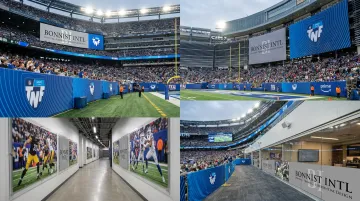
Arenas and stadiums use wide format printing to turn every surface into a branded asset. Bonnist International has executed this kind of work at some of the most recognized venues in the country:
- MetLife Stadium — custom suite vinyl graphics for Thursday Night Football VIP spaces; over 40 weather-resistant outdoor barrier covers with TNF/Amazon Prime Video branding deployed for a nationally broadcast event
- Madison Square Garden — second-surface acrylic printed basketball action photography installed along facility corridors
- NYCFC — branded Dusted Crystal glass graphics throughout the club's headquarters; custom mesh windscreens at their training facility
Wide format printing in this context spans wayfinding, sponsor displays, fan experience environments, and broadcast-ready venue branding. Every application requires materials engineered for high-traffic and outdoor exposure.
Corporate Offices
Businesses use wide format printing to make brand culture physically present. Common applications include:
- Wall graphics featuring mission statements and company values
- Direct-to-acrylic lobby art and gallery collections
- Dimensional reception signage
- Branded glass partitions
Bonnist has delivered these solutions across corporate environments — including dimensional logo displays for Consumer Reports' reception area and Dusted Crystal vinyl glass graphics for the NYCFC headquarters. The work moves from print shop to fully integrated environmental branding.
Hospitality and Retail
Wide format printing shapes what guests and customers feel the moment they enter a space. Bonnist's project for MSocial Hotel NYC illustrates the scale possible: a custom mural — merging the Charging Bull, Wall Street signage, and Broadway into a cohesive collage — printed on Dreamscape wallpaper and installed across more than 450 guest rooms. Every room became a storytelling environment.
Retail applications include window graphics, point-of-sale displays, and branded décor. POPAI's Mass Merchant Shopper Engagement Study reported an 82% in-store decision rate and 62% unplanned purchases in mass merchant environments — underlining why strategic visual display at the point of purchase matters.
Events and Trade Shows
Speed and portability define event-specific wide format work. Bonnist produces step-and-repeat banners, event backdrops, SEG backlit displays, tension fabric booth graphics, and branded environments for corporate events, trade shows, and promotional activations. The NBA/AWS co-branded step-and-repeat banner in their portfolio and the backlit displays produced for the Excellent Leadership H2 Summit demonstrate the range of formats deployed in this segment.
Key Benefits of Wide Format Printing for Businesses
Large graphics command attention in ways that smaller formats simply can't match. According to the OAAA/Morning Consult OOH Ad Study, 88% of adults noticed out-of-home advertising in the past 30 days, 43% visited a business within 30 minutes of seeing directional OOH signage, and 78% of those visitors made a purchase. Physical, large-scale media drives measurable consumer action.
For businesses investing in branded environments, wide format printing delivers across three key dimensions:
Scale and Visual Impact
Large format graphics are hard to ignore by design. A banner spanning the side of a building, a stadium barrier cover at MetLife Stadium, or a floor-to-ceiling lobby mural creates brand presence that no digital ad can replicate in physical space.
Versatility Across Surfaces
One investment in wide format capability spans a wide range of applications:
- Indoor and outdoor environments
- Flexible substrates (vinyl, mesh, fabric) and rigid materials (acrylic, aluminum, PVC)
- Illuminated displays, printed glass, and wall graphics
- Trade show booths, corporate lobbies, hotel guest rooms, and stadium perimeters
A single experienced vendor can maintain consistent quality and brand identity across all of them.
ROI and Print Longevity
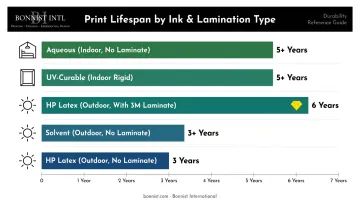
UV and solvent ink prints on quality substrates last years without replacement. Outdoor graphics with appropriate lamination typically achieve 3–6 years of lifespan; indoor installations last longer still. When Bonnist International engineered outdoor barrier covers for MetLife Stadium, they were built for reuse across multiple events — not discarded after one. That durability lowers the cost per impression significantly compared to the upfront production cost.
Frequently Asked Questions
What is wide format printing and how is it different from regular and large-format printing?
Wide format printing uses specialized printers to produce graphics on media 18–100 inches wide — far beyond standard office output (up to 17 inches). "Wide format" describes the printer's width capability, while "large format" describes the oversized output category; the terms are used interchangeably in practice.
What is a wide format printer used for?
Wide format printers produce banners, wall murals, vehicle wraps, trade show graphics, retail signage, event backdrops, windscreens, barrier covers, and large-scale branding installations. Industries served include sports and entertainment, corporate offices, hospitality, events, retail, and architecture.
What materials can be used in wide format printing?
Common flexible materials include vinyl, fabric, canvas, mesh, and backlit film. Rigid substrates include acrylic, PVC/Sintra, aluminum composite (DIBOND), foam board, and corrugated plastic. The right choice depends on whether the application is indoor or outdoor, the required durability, and the intended visual finish.
What types of ink are used in wide format printing?
The four main types are aqueous (water-based, best for indoor and fine art), solvent (durable, bonds to vinyl for outdoor use), UV-curable (works on rigid non-absorbent surfaces, cures instantly), and latex (water-based, eco-friendly, suitable for indoor and outdoor). The best option depends on your substrate, environment, and how long the print needs to last.
How long do wide format prints last?
Lifespan depends on ink, substrate, lamination, and exposure. HP Latex prints achieve up to 3 years outdoors unlaminated and up to 6 years with specified 3M laminates. Indoor prints on quality materials can last 5+ years. Professional lamination significantly extends lifespan across all environments.
Is wide format printing suitable for indoor brand environments and corporate spaces?
Highly effective. Wide format printing produces wall murals, environmental graphics, branded glass installations, direct-to-acrylic art, and backlit displays for corporate offices, lobbies, hospitality spaces, and arenas. These applications reinforce brand identity and create immersive environments that elevate both employee and visitor experience.