: Which is Better?](https://file-host.link/website/bonnist-ofrd29/assets/blog-images/d615fc9c-2bc3-4b8b-b214-2df3fc5b8701/1782876079766752_7309c16277d7467b8400f9728d291955/360.webp)
For event planners, sports marketing teams, and corporate brand managers, this material choice affects more than aesthetics. It shapes image quality in photography, how easily the banner travels between venues, how long it lasts, and ultimately how sponsors and media perceive the brand. Get it right, and every photo becomes a brand asset. Get it wrong, and you're retouching sponsor logos out of a sea of glare.
This guide breaks down how each material is made, where each performs best, and how to choose based on your specific event context.
Key Takeaways
- Fabric produces a matte, glare-free finish — the right choice for indoor press events, galas, and sponsor walls where photography matters
- Vinyl is waterproof and weather-resistant, making it the practical option for outdoor activations and one-time use
- Photography requirements are the single most important factor in the material decision
- Fabric folds flat for easy transport; vinyl must be rolled on a core to avoid permanent creasing
- Cost difference at 8ft x 8ft is roughly $10 more for fabric — an easy trade-off when the banner will be reused
Fabric vs. Vinyl Step and Repeat Banners: Quick Comparison
| Factor | Vinyl | Fabric |
|---|---|---|
| Starting price (8ft x 8ft) | ~$139 | ~$149 |
| Material | PVC flex (scrim mesh core) | Polyester knit |
| Print process | Digital / eco-solvent | Dye sublimation |
| Common weights | 13oz, 18oz | 9oz wrinkle-resistant polyester |
| Finish | Semi-gloss or matte options | Matte, non-reflective |
| Flash photography | Can produce glare or hot spots | Absorbs light; no glare |
| Weather resistance | Waterproof, wind-resistant | Not waterproof; indoor only |
| Lifespan | Up to 5 years (heavier weights) | 3+ years with proper care |
| Storage | Must roll on a core tube | Folds flat; packs in a bag |
| Best use | Outdoor events, one-time use | Indoor press events, travel |
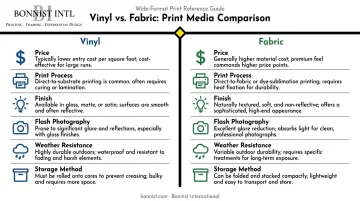
How Much More Does Fabric Cost?
The cost gap between fabric and vinyl is smaller than most people expect. BannerBuzz lists an 8ft x 8ft vinyl step and repeat at $139 and the fabric equivalent at $149 — about 7% more for fabric. For teams reusing the banner across multiple events, fabric's foldable storage and longer lifespan make it the more cost-effective option.
What Is a Vinyl Step and Repeat Banner?
Vinyl step and repeat banners are large-format backdrops made from PVC-based material (typically scrim vinyl, which uses a woven mesh inner layer sandwiched between PVC layers for added strength). They're printed with a repeating grid of logos, brand marks, or sponsor names, ensuring at least one logo is always visible regardless of how a photo is cropped.
The print process uses large-format digital printing (often eco-solvent at 720 DPI) applied directly to the PVC surface. The result is sharp, high-contrast color — most effective outdoors or in natural light.
Standard material weights run 13oz for most event applications, with 18oz heavy-duty vinyl available for demanding weather conditions.
Where Vinyl Excels
Vinyl's strengths are practical: it's waterproof, wipe-clean with a damp cloth, and available from many vendors within 24–48 hours. Its stiffness also reduces billowing in mild wind — a real advantage when the banner is standing outdoors.
Best use cases for vinyl step and repeat banners:
- Outdoor sponsor activations and street-level events
- Stadium fan zones and game-day tailgate areas
- Sports exterior signage and perimeter branding
- Retail grand openings and community events
- One-day brand activations where cost efficiency matters most
One trade-off worth noting: even matte vinyl finishes can still reflect camera flash under bright indoor lighting. UPrinting recommends angling lights to avoid direct reflection when using vinyl indoors, which adds a layer of setup complexity that fabric simply doesn't require.
What Is a Fabric Step and Repeat Banner?
Fabric step and repeat banners use polyester knit material printed via dye sublimation — a process where heat converts ink into a gas that bonds directly with the fabric fibers. Because the color infuses into the material rather than sitting on top, there's no peeling, cracking, or surface layer to reflect light.
That bonding process produces a seamless, soft, matte finish. According to Signs.com, fabric step and repeat banners are naturally non-reflective and glare-free, and the polyester surface absorbs light rather than bouncing it back. For events where a professional camera or ring light is pointed at the backdrop, this distinction is the difference between crisp, usable sponsor photos and washed-out frames.
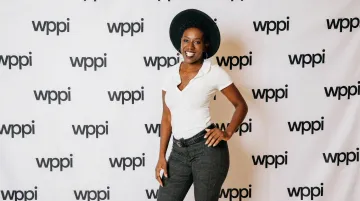
Why Photography Changes the Equation
When photos are a deliverable — for press releases, sponsor reporting, or social media — fabric's anti-glare finish isn't just a preference, it's a functional requirement. A vinyl banner at an indoor press event risks producing unusable sponsor photos under flash photography. For corporate clients or sports teams whose sponsor ROI is partly measured through media impressions, that's a meaningful distinction.
CanvasEtc's step and repeat material guide confirms that fabric is the superior professional choice for glare avoidance, describing it as "100% matte and non-reflective." This is why fabric has become the default material for indoor red carpet events, press junkets, and corporate media backdrops.
Additional Fabric Advantages
- Folds flat like a tablecloth — no roll tube required
- Wrinkles steam out on-site in minutes with a handheld steamer
- Machine washable (cold water, gentle cycle)
- Absorbs ambient sound — useful in large halls with hard floors
- Estimated lifespan of 3+ years with proper storage
One firm limitation: fabric should not be used outdoors. Wet fabric darkens, loses visibility, and is not waterproof. For any weather-exposed event, vinyl is the correct choice.
Best Use Cases for Fabric
Within those indoor constraints, fabric covers a wide range of professional applications:
- Award ceremonies and gala dinners
- Indoor press conferences and media scrums
- Corporate sponsor walls and brand activations
- Sports team media days (indoor arenas)
- Hospitality brand photo moments (lobby activations, Instagram-worthy setups)
- Traveling marketing teams moving between multiple venues
Bonnist International has produced step and repeat banners for clients including NYCFC, MetLife Stadium, and MSG — working across both fabric and vinyl depending on whether the environment is indoors or out.
Fabric vs. Vinyl: Which Is Better for Your Event?
Neither material is universally superior. The right choice depends on three variables:
1. Location — Indoor or outdoor? This is the fastest filter. Outdoor = vinyl. Rain, humidity, or wind exposure rules out fabric immediately. Indoor events open the door to both, but photography requirements often settle it.
2. Lighting — Will there be professional cameras or flash? If the answer is yes — press photographers, brand content teams, broadcast crews — fabric is the right call. The matte surface ensures logos register cleanly in every frame. Vinyl can work indoors with careful lighting setup, but it introduces risk.
3. Logistics — How often will this banner be used? A one-time outdoor activation? Vinyl is cost-effective and practical. A backdrop that travels between events, needs to fit in a carry bag, and has to look sharp at every stop? Fabric wins on portability and longevity.
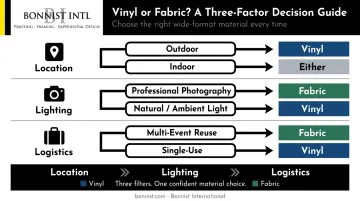
Quick Decision Guide
Choose vinyl if:
- The event is outdoors or weather-exposed
- Budget is the primary constraint
- The banner will be used once or twice
- Fast turnaround (24–48 hours) is required
Choose fabric if:
- The event is indoors
- Professional photography or press coverage is expected
- The banner will travel to multiple venues
- The brand experience needs to feel premium
A Real-World Parallel
Consider a sports team that runs both an indoor sponsor recognition night and an outdoor fan zone on game day. The indoor event has press photographers and a branded media backdrop — fabric is the right call, ensuring every sponsor logo in every photo is clean and usable. The outdoor fan zone operates in open air with variable lighting — vinyl holds up against the elements and delivers strong visual presence at a lower cost.
Bonnist International's work at MetLife Stadium put this split-material approach into practice: fabric barrier covers handled outdoor crowd control and sponsor visibility during a nationally televised event, while vinyl wall graphics went into interior VIP suites for corporate hospitality. One venue, two environments, two material calls — each right for its context.
For recurring events — corporate award nights, seasonal sports activations, multi-stop tours — Bonnist's team can run a cost-per-use comparison across both materials to pinpoint which option makes financial sense over the full event schedule.
Reach out at david@bonnist.com or call 845-368-2220.
Conclusion
The fabric vs. vinyl decision becomes straightforward once you apply three filters: Location (indoor or outdoor), Lighting (photography expectations), and Logistics (travel, storage, and reuse frequency). Clarifying these three factors makes the right material obvious.
For sports teams, hospitality brands, and corporate event teams running multiple events per year, the stakes compound across every activation. Each banner either reinforces sponsor confidence and brand perception — or quietly chips away at both.
Working with a fabrication partner who understands both the design and production side of this decision ensures your banner performs in the actual environment it will be used in, not just on a spec sheet.
Frequently Asked Questions
Are vinyl or fabric banners better?
Neither is universally better. Vinyl performs best outdoors for durability and weather resistance; fabric is the preferred choice indoors where photography quality matters. The right answer depends entirely on the event environment and whether the banner will be photographed.
What material is a step and repeat banner?
Step and repeat banners are most commonly made from either PVC vinyl or polyester fabric. Vinyl uses large-format digital printing. Fabric uses dye sublimation — a heat-bonding process that produces a matte, non-reflective finish that photographs more cleanly.
How long do fabric step and repeat banners last?
Signs.com estimates fabric step and repeat banners last 3+ years with proper placement, care, and storage. Fabric banners are also machine washable, which extends their life further compared to vinyl.
Can fabric step and repeat banners be used outdoors?
No — fabric banners are not waterproof and are not recommended for outdoor use. Wet fabric darkens and loses visibility. For any weather-exposed event, vinyl is the appropriate material.
What size should a step and repeat banner be?
A minimum height of 8 feet ensures logos remain visible behind standing guests. For width, plan for 2 feet per person — so a group of four requires at least an 8-foot-wide banner. Standard popular sizes are 8ft x 8ft and 8ft x 10ft.
How do I store and transport a step and repeat banner?
Fold fabric banners flat and store in a carry bag; steam out wrinkles before the event. Vinyl banners must be rolled around a core tube — never folded — as folding causes permanent creases and can crack the printed surface.