Introduction
Hang a standard photo print on a wall and it disappears into the background. Put that same image behind a sheet of optically clear acrylic and the result is immediate: colors intensify, subtle depth emerges, and the piece commands attention from across the room.
That's the physics of how acrylic refracts light, amplifying color and creating a subtle three-dimensional quality that no canvas or framed print can replicate.
For businesses evaluating wall art for professional spaces — corporate lobbies, sports facilities, hotel corridors — that visual difference matters. The right format doesn't just fill a wall; it shapes how a space feels to everyone who enters it.
This guide covers everything you need to know: what acrylic prints are, how they're made, what separates cast from extruded acrylic, how they compare to canvas and metal, and which environments get the most out of the format.
Key Takeaways
- Acrylic prints deliver unmatched color depth and visual intensity through light refraction
- Face mounting onto photo paper produces richer color than direct UV printing; adhesive quality is critical
- Premium acrylic (cast, UV-filtering) blocks up to 99% of UV rays, significantly extending print life
- Frameless, floating installation creates a gallery aesthetic well-suited to high-traffic commercial spaces
- For maximum visual impact, choose high-contrast, color-rich images at 300 DPI minimum
What Is an Acrylic Print?
An acrylic print is a high-resolution image either printed on photo paper and bonded behind a clear acrylic sheet, or printed directly onto the acrylic surface itself. The result is a glossy, frameless wall art piece with no visible border — just image, depth, and light.
The material is polymethyl methacrylate, or PMMA. According to Encyclopaedia Britannica, it's sold under well-known trade names including Plexiglas, Lucite, and Perspex — all the same polymer, just different brand names depending on the manufacturer and region.
What Makes Acrylic Prints Look Different
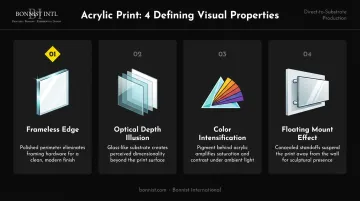
Three visual properties set this format apart:
- No frame interrupts the image — edges are polished and the border disappears entirely
- Light passing through the acrylic creates an optical illusion of depth, making the image appear slightly three-dimensional
- The acrylic acts as a lens, intensifying color saturation in a way flat paper prints cannot match
- Mounted with hidden hardware, the print sits slightly off the wall with no visible brackets — a clean, suspended look common in commercial gallery and hospitality installations
How It Differs from Glass-Framed Prints
Traditional framed prints create an air gap between the glazing and the print surface. That gap causes glare, reflects ambient light, and softens colors. With acrylic prints, the image is bonded directly to or behind the acrylic — eliminating the gap and with it most of the glare.
Weight is another practical difference. ACRYLITE confirms that a 0.250-inch acrylic sheet weighs 1.5 lb/sq ft compared to 2.9 lb/sq ft for equivalent plate glass. Acrylic also has 10 to 20 times greater impact strength than plate glass, making large-format installations significantly safer in high-traffic environments.
Thickness Options
Professional print labs typically offer acrylic in the following gauges:
- 1/8 inch (3mm) — the standard choice; handles most wall art applications without issue
- 1/4 inch (6mm) — adds visual weight and greater perceived depth; the preferred gauge for large-format and premium installations where physical presence matters
How Acrylic Prints Are Made
Two core production methods exist, and they produce meaningfully different results.
Face Mounting vs. Direct UV Printing
Face mounting is the premium method. The image is first printed on professional photo paper — glossy or metallic — then bonded face-first to the back of the acrylic sheet using an optically clear mounting adhesive. Drytac describes this process as requiring a high-quality, bubble-free adhesive bond; any imperfection in the adhesive layer will show through the transparent acrylic and degrade the final result.
Face mounting produces richer color because photo paper absorbs ink more effectively than bare acrylic, yielding a wider color gamut and finer tonal gradation. The acrylic layer then amplifies that already-vibrant print with its refractive properties. Metallic and pearl papers in particular create high-impact results when combined with the acrylic's natural luminosity.
Direct UV printing uses UV-cured ink applied straight onto the acrylic surface by a flatbed printer. Roland DGA and Mimaki both produce equipment for this method. It's faster and eliminates the adhesive bonding step, but the color output is generally less vibrant than face mounting because bare acrylic doesn't absorb ink as efficiently as photo paper.
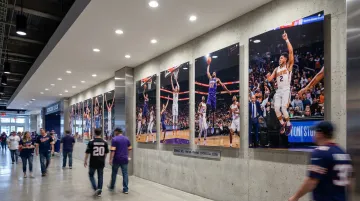
Direct UV printing works well for large-scale venue and corporate installations where turnaround speed and output volume matter. Bonnist International has used this method for sports venue corridor displays — including work at Madison Square Garden, where dynamic basketball photography was printed directly onto glossy acrylic panels for a high-energy corridor environment.
Cast Acrylic vs. Extruded Acrylic
The type of acrylic sheet used matters, particularly for premium applications.
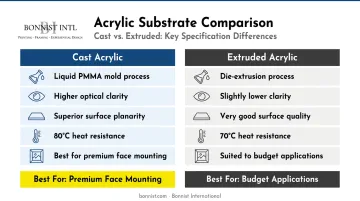
| Property | Cast Acrylic (e.g., PLEXIGLAS GS) | Extruded Acrylic (e.g., PLEXIGLAS XT) |
|---|---|---|
| Manufacturing | Liquid PMMA poured into molds | Molten PMMA pushed through a die |
| Optical clarity | Higher — superior light transmission | Slightly lower |
| Surface quality | Higher planarity | Very good, but slightly less precise |
| Temperature resistance | ~80°C maximum service temp | ~70°C maximum service temp |
| Best for | Premium fine art, face mounting | Budget-tier and functional applications |
| Cost | Higher | Lower |
Source: Röhm/PLEXIGLAS technical specifications
For premium print applications — particularly face mounting — cast acrylic is the correct choice. Its superior surface planarity ensures the adhesive bond sits evenly, and its optical properties maximize the depth and clarity of the finished piece.
Once the production method and material are decided, file preparation is the final variable that determines print quality. Getting it right before production prevents costly reprints.
File Preparation for Acrylic Printing
- Minimum resolution: 300 DPI at the intended print size
- File formats: TIFF or high-quality PNG for lossless color data; avoid compressed JPEGs for large-format work
- Color profiles: Request the lab's ICC profile and soft-proof before approving production — acrylic's refractive properties typically shift perceived color relative to a monitor preview
Key Advantages of Acrylic Prints
Color Vibrancy and Depth
The refractive properties of acrylic don't just display an image — they enhance it. Light entering the acrylic layer bends slightly before reaching the image surface, intensifying perceived saturation and creating that characteristic glow that sets acrylic apart from paper or canvas prints. WhiteWall specifically recommends acrylic for colorful motifs, noting the depth effect it creates for bold, high-impact imagery.
This effect is most pronounced with high-contrast images — sports photography, architectural shots, landscapes with strong color definition.
UV Protection and Longevity
UV exposure is the primary enemy of any printed artwork. Here's where acrylic type makes a significant difference:
- Standard clear acrylic — provides baseline UV filtering
- Conservation Clear Acrylic — Tru Vue's Conservation Clear blocks 99% of UV rays
- TruLife Acrylic — also rated at 99% UV protection, developed specifically for face mount and direct print applications
- Tru Vue's Conservation Grade products meet ISO 18902 and pass the ISO 18916 Photographic Activity Test, qualifying as photo-safe glazing
For commercial installations where replacement cost is a real consideration, the UV protection built into premium acrylic directly translates to lower long-term operating costs. A properly maintained face-mounted print on UV-filtering acrylic can retain its quality for decades.
The Floating Effect and Installation Aesthetics
Hidden mounting hardware — either flush hanger plates for smaller formats or standoff/aluminum backframe systems for large pieces — allows acrylic prints to sit off the wall with no visible brackets or hardware. The result is a clean, frameless floating effect that reads as intentional and gallery-caliber rather than decorative.
Corporate lobbies, sports corridors, and hotel common areas are natural fits for this format. Bonnist's work at MSG illustrates it well: glossy acrylic panels reflecting corridor lighting turned basketball action photography into something closer to a curated exhibition than a hallway display.
Safety and Practicality at Scale
For large commercial installations, the practical advantages compound:
- Half the weight of equivalent glass reduces structural load and installation complexity
- 10 to 20 times greater impact resistance than plate glass minimizes liability in high-traffic areas
- Shatter-resistant — if broken, acrylic fractures into larger, less dangerous pieces than glass
Acrylic Prints vs. Canvas, Metal & Framed Prints
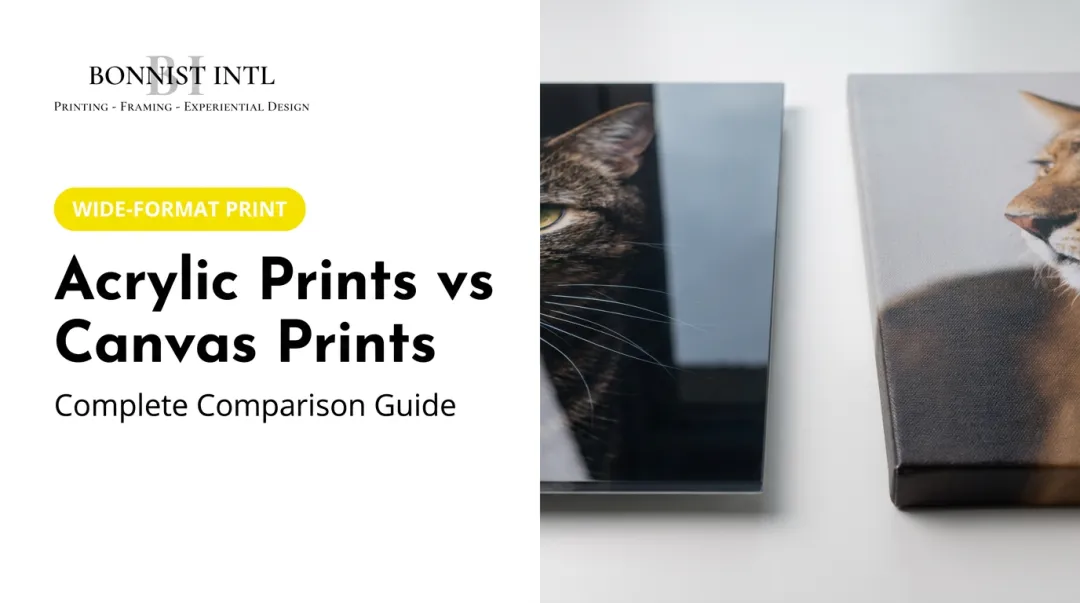
| Attribute | Acrylic | Canvas | Metal (Aluminum) | Framed Print |
|---|---|---|---|---|
| Color vibrancy | Highest — refractive depth amplifies saturation | Warm, slightly muted by texture | High — vibrant, no glare | Dependent on paper and glazing type |
| Durability | Excellent — UV filtering, moisture-resistant, shatter-resistant | Moderate — susceptible to humidity and UV without coating | Excellent — ChromaLuxe panels rated 65 years (WIR) | Variable — depends on glazing quality |
| Aesthetic style | Modern, glossy, gallery-quality | Warm, textured, traditional | Contemporary, sleek, matte-to-satin | Classic, versatile, heavier presence |
| Weight | Approx. half the weight of glass equivalent | Light (canvas on stretcher frame) | Light | Heaviest (frame + glass) |
| Price point | Premium | Lower cost | Mid-premium | Highly variable |
| Best for | Bold, color-rich images; modern professional spaces | Traditional décor; softer imagery | Contemporary spaces; glare-sensitive environments | Archival presentations; classic interiors |
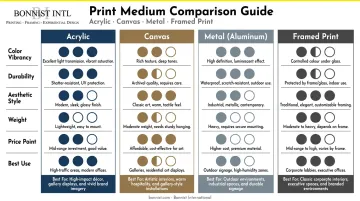
Use this table as a starting point, then match your choice to the space and purpose:
- Acrylic — best when visual impact leads the decision: color-rich imagery, modern or high-end environments, centerpiece installations
- Canvas — best when warmth and texture suit the space, the budget is tighter, or the imagery calls for a traditional feel
- Metal — best when glare is a concern (anti-reflective finishes are available), the aesthetic is contemporary, or proven archival performance data is a priority
Best Settings & Use Cases for Acrylic Prints
Commercial and Institutional Spaces
Acrylic prints perform best where they need to hold attention at distance, under varied lighting, and against competing visual noise. Corporate reception areas, hotel lobbies, sports arena corridors, and event venues all fit this profile well:
- Corporate lobbies — large-format panels create immediate visual impact at entry points
- Arena and stadium corridors — high-traffic zones where ambient light shifts throughout the day
- Hotel public spaces — environments where art must read well under both natural and artificial light
- Event venues — spaces where visual dynamism reinforces the energy of the setting
The format's ability to reflect and interact with ambient light becomes an advantage in these environments — where lighting conditions shift throughout the day, acrylic prints remain visually dynamic rather than flat.
Bonnist International's work for Madison Square Garden illustrates the commercial application clearly: second-surface acrylic basketball photography installed along a sports facility corridor creates an immersive, high-energy environment that reinforces the venue's identity for athletes, staff, and visitors alike.
Corporate Branding and Recognition Displays
Acrylic is increasingly used for:
- Brand wall art in office corridors and lobbies — direct-to-acrylic panels with company imagery, values, or photography
- Recognition installations — sports and performance photography with accompanying informational plaques, as seen in Bonnist's MSG corridor work
- Award presentations — the material's premium appearance communicates prestige without the bulk of traditional framing
A project for a major sports and entertainment company put this into practice: gallery-quality acrylic panels installed across newly redesigned office corridors turned functional hallways into a branded visual environment — one that shifted how both visitors and employees experienced the space.
Residential and Multi-Use Applications
While this guide focuses on commercial contexts, acrylic prints scale equally well to residential gallery walls, photography studios, and creative spaces. From single accent pieces to multi-panel installations, the format holds its visual quality at any scale — which is why designers and architects frequently specify it across both commercial and residential projects.
How to Care for Your Acrylic Prints
Acrylic is durable, but it requires different care than glass. The surface scratches more easily, and the wrong cleaning approach can cloud or permanently damage the finish.
Cleaning
- Use a soft microfiber or lint-free cloth — always
- Apply only mild soap solution and lukewarm water, using light pressure
- Do not spray liquid directly onto the acrylic surface — apply to the cloth first
- Avoid these entirely: paper towels, abrasive cloths, Windex, ammonia-based cleaners, acetone, lacquer thinner, or any solvent-based products
Sources: Tru Vue care guidance and ACRYLITE care and cleaning technical information
UV Exposure and Storage
- Keep prints away from prolonged direct sunlight — UV-filtering acrylic reduces but does not eliminate UV-related fading over extended periods
- For storage, wrap in soft, non-abrasive material and keep flat
- Avoid storing near heat sources — radiators, steam pipes, or direct heat can soften and deform acrylic sheet
- Store in controlled-temperature, low-humidity conditions to preserve the adhesive bond in face-mounted prints
Frequently Asked Questions
Are acrylic prints worth it?
For buyers prioritizing exceptional color vibrancy, a modern gallery aesthetic, and long-term durability — yes. The premium cost is justified in professional and commercial settings where visual impact directly supports client impressions, lobby presence, or hospitality environments. In lower-visibility or budget-constrained contexts, canvas or metal may offer better value.
How long do acrylic photo prints last?
High-quality face-mounted prints on UV-filtering acrylic can retain their quality for decades when properly maintained and kept from prolonged direct sunlight. The acrylic layer blocks UV exposure and resists moisture, giving the underlying print far longer life than unframed or uncoated formats.
What is the difference between acrylic and canvas prints?
Acrylic delivers sharper detail, more vibrant color, and a modern glossy finish. Canvas offers a warmer, textured, traditional aesthetic at a lower price point. The right choice depends on the space's aesthetic, the image content, and whether visual impact or warmth is the priority.
Can acrylic prints be displayed in high-humidity environments?
Face-mounted acrylic prints resist moisture well since the image is sealed between the acrylic and a backing material. That said, prolonged steam exposure in poorly ventilated spaces — hotel bathrooms, pool areas — can weaken the adhesive bond, so adequate airflow matters in high-humidity installations.
What types of images work best on acrylic?
High-contrast, color-rich images perform best — landscapes, sports photography, architectural shots, and branded graphics with strong visual definition. Low-resolution files or heavily muted, low-contrast images won't benefit from acrylic's amplification properties and may highlight file quality issues at large scale.
How do you hang or mount an acrylic print?
Two main options: a flush hanger plate (adhesive-mounted to the back, suitable for smaller formats) or a standoff/aluminum backframe system for larger pieces. Both conceal all hardware and create a clean floating effect off the wall — the installation style most associated with the format's gallery look.