The challenge most teams face is real: creative ambitions almost always outpace budgets, timelines, and venue constraints. A vision that looks stunning in a deck can collapse under the weight of union load-in rules, ceiling heights, or a material that photographs well but degrades in six months.
This guide covers the full scope of experiential exhibition fabrication — what it is, how it works, what materials and techniques drive it, where it's applied across industries, and how to choose the partner who can execute it without losing the original idea.
Key Takeaways
- Experiential fabrication transforms brand concepts into physical environments that engage audiences on emotional, sensory, and intellectual levels.
- The process runs from concept through strike, and it works best when a single partner owns the full chain.
- Material choice, venue logistics, and operational usability drive the experience as directly as visual design does.
- Every fabrication decision should connect back to a measurable event or business goal, not just aesthetics.
- The right partner brings both creative conviction and production discipline in equal measure.
What Is Experiential Exhibition Fabrication?
Experiential exhibition fabrication is the process of translating a brand concept into a physical, built environment designed to engage audiences — not just inform them. The result is immersion, not decoration.
This discipline has two distinct but deeply connected phases:
- Exhibition design — concept development, narrative strategy, material selection, 3D visualization, and prototyping
- Exhibit fabrication — engineering, physical construction, finishing, and assembly of those designed elements
Separating them is a false economy. When a fabrication team isn't involved until after creative is locked, the result is usually costly revisions, compromised design integrity, or a build that simply can't be executed on time or on budget.
What Falls Under This Discipline
The deliverables are broader than most clients expect:
- Custom structures and scenic builds
- Large-format graphics, wall coverings, and printed environments
- Backlit SEG (Silicone Edge Graphic) display systems
- Branded vinyl — wall, glass, suite, and locker room applications
- Dimensional signage and 3D-fabricated elements
- Step-and-repeat backdrops and press environments
- Tension fabric displays for events and trade shows
- Wayfinding and branded perimeter systems
Bonnist International, for example, has delivered all of these across sports venues, hospitality properties, corporate offices, and live events — managing concept through installation under one roof. That end-to-end ownership matters: when one partner controls the full process, design intent survives from the first sketch to the final installation bolt.
What Makes It "Experiential"
Those physical deliverables serve a specific purpose: changing how visitors feel about a brand, not just what they know about it. That's the line between decoration and experience.
The data supports this. According to EventTrack 2026, 61% of consumers are more inclined to purchase after attending a live event, and 82% of brands now have or are developing sustainability strategies for their event programs. A separate Freeman Trends Report found that 64% of respondents identified immersive experiences as the most important element of in-person events.
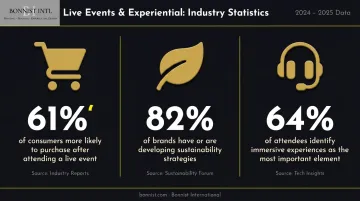
Those numbers reflect a shift in how brands allocate investment — and fabrication quality is what determines whether an environment actually delivers on that intent.
The Experiential Exhibition Fabrication Process
Stage 1 — Planning and Concept
Every effective fabrication project starts with alignment: goals, budget, timeline, venue constraints, and the narrative the brand needs to communicate. This is also when a fabrication partner should enter the conversation.
Bringing fabricators in after creative is finalized is one of the most common and expensive mistakes teams make. Production realities (how something ships, how it assembles in a venue with a 9-foot ceiling, whether it can be repacked for a second city) must inform the design from the start, not reshape it after the fact.
Stage 2 — Design Development
Design development translates a concept into something buildable. That means:
- Feasibility-tested drawings and elevations
- Material selections tied to use case (durability, weight, finish)
- 3D visualizations the client can actually evaluate
- Production-first thinking at every decision point
The question "how will we build, transport, and install this?" should be asked during design, not during production.
Stage 3 — Digital Fabrication and Prototyping
Before a single physical component is committed, digital fabrication tools allow teams to explore, test, and refine.
Three tools do most of this work:
- CNC machining produces custom cutouts, shaped components, and signage with repeatability that hand-routing can't match at scale
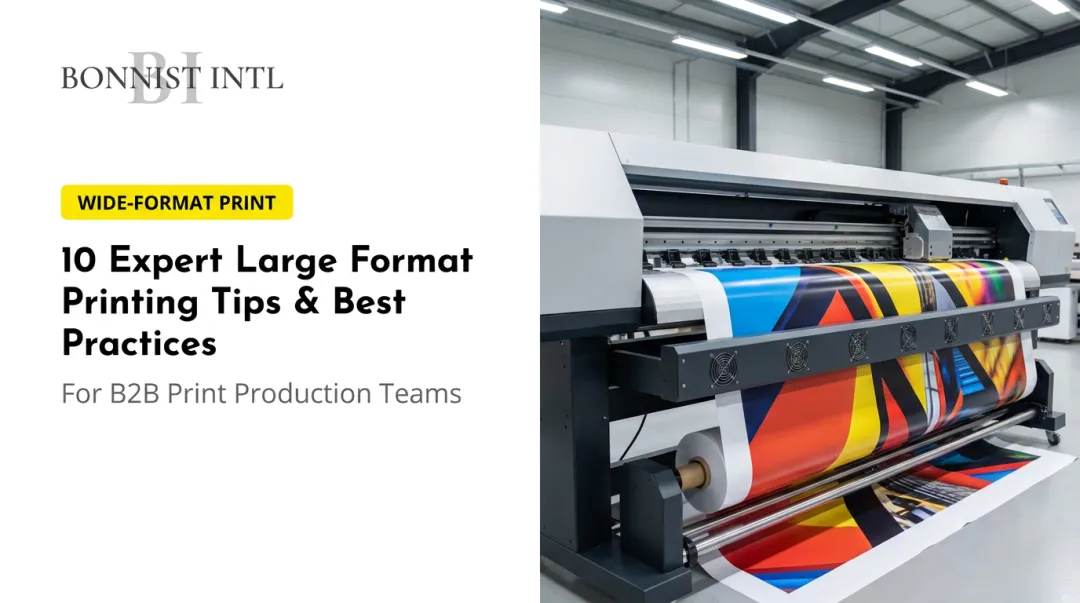
- Large-format printing starts at 24 inches wide and scales to stadium-spanning graphics, engineered to survive transport and reassembly
- 3D printing builds component models from CAD files layer by layer, so teams can evaluate scale, fit, and form before committing to full production
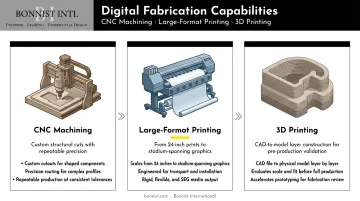
These tools catch fit and structural issues before production begins. A detail that looks right in a rendering but fails under load gets caught at the prototype stage — not on the venue floor at midnight before opening.
Stage 4 — Physical Fabrication
The build phase is where the project becomes real. Components are engineered, assembled, finished, and quality-checked before anything is packed. This stage includes:
- Structural construction and assembly
- Graphic application (vinyl, direct-to-substrate, SEG fabric)
- Lighting integration (backlit frame systems, ambient-responsive material choices)
- Surface finishing, lamination, and protective coating
- Pre-shipment quality review
At Bonnist International, this phase combines CNC machining, laser cutting, 3D printing, and wide-format printing, held to the precision and durability standards that clients like MSG and MetLife Stadium depend on.
Stage 5 — Shipping and Installation
Logistics are as strategic as design. How a build packs, ships, and assembles on site is determined not just by the venue, but by decisions made in Stage 2.
Door dimensions, freight elevator specs, load-in windows, union rules, and ceiling heights all constrain what can arrive and how it can go in. Experienced fabricators design for these variables from the start. Structures arrive in sections that fit through real doors and assemble in the time actually available.
Stage 6 — Strike and Beyond
Once the show closes, the decisions made in Stage 2 determine what happens next. Teardown is the most underplanned phase in fabrication, and forward-thinking design choices made early (modular sections, durable finishes, interchangeable graphic systems) determine whether a build lives past one event or gets discarded.
Bonnist's Quick Change Easy Opening Frames, for example, allow sports venues to swap graphics between seasons without replacing structural hardware. SEG display systems allow fabric panels to be re-skinned while the aluminum frame infrastructure is retained. The result: the same structural investment supports multiple seasons, multiple campaigns, or multiple cities.
Core Elements That Make Experiential Exhibitions Work
Storytelling Through Space
Effective environments have a narrative arc. Visitors move through the space and feel a progression — not a collection of isolated displays. Signage, lighting, structure, and graphics work together to guide that story.
Bonnist's "Inspired Fabrication" philosophy defines this precisely: creating environments from innovative, imaginative, or emotionally resonant sources — integrating unique narratives, artisanal craftsmanship, and sustainable practices. The difference between a lobby installation and a lobby experience is whether there's a story a visitor can follow.
Sensory and Interactive Design
Audiences now expect more than visual engagement. Tactile surfaces, sound integration, and interactive moments that turn passive observers into participants are increasingly standard.
These elements require fabrication expertise in both construction and technology integration — the structure must be engineered to accommodate the interactive component, not treated as an afterthought that gets bolted on later. That same structural thinking carries directly into how light behaves within a space.
Lighting as a Fabrication Tool
Lighting is not decoration. It defines atmosphere, directs attention, and changes how materials and graphics read in a live environment.
Bonnist integrates lighting from the structural design stage — most visibly through backlit SEG (silicone edge graphic) systems, where illumination is built into the frame itself. The result is a luminous graphic surface, not a flat print with a light behind it. Material choices also account for lighting: acrylic panels at MSG reflect ambient corridor light in ways that amplify the basketball photography installed there.
Operational Usability
This is the layer most teams forget until it's too late. Before fabrication begins, the operational reality of the space needs answers:
- Where does staff store materials between uses?
- How does an interactive element reset between visitors?
- Are entry and exit points intuitive under crowd load?
Poor operational planning creates friction that erodes the visitor experience — no matter how well the environment photographs on opening day.
Materials, Techniques, and Technology
Common Materials by Use Case
| Use Case | Primary Materials |
|---|---|
| Permanent installations | Acrylic, metal, Dreamscape wallpaper, direct-to-substrate prints |
| Touring / event builds | Weather-resistant fabric, tension fabric, SEG systems |
| Brand-forward premium moments | Backlit SEG, direct-to-acrylic, dimensional brass lettering, Dusted Crystal vinyl |
| Outdoor environments | Weather-resistant mesh, UV-stable ink, structural vinyl |
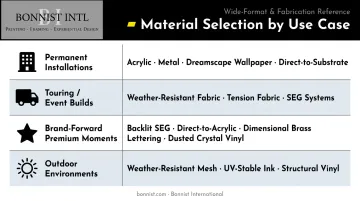
Material selection comes down to three practical factors: the environment where it lives, how long it needs to perform, and what installation and maintenance look like over time. Cost follows from those answers — not the other way around.
Digital Fabrication Techniques
CNC routing, large-format printing, and 3D printing have expanded both what's possible and what's practical. Dimensional signage that once required weeks of hand-fabrication can now be prototyped, tested, and produced with precision in a fraction of the time.
Bonnist's production approach merges traditional artisanal skills with CNC machining, laser cutting, and advanced digital printing — delivering precise, repeatable results while maintaining the handcrafted quality that complex branded installations demand.
That production capability only matters if the materials and methods hold up over time. Increasingly, that means sustainability isn't a nice-to-have — it's a design constraint.
Sustainability in Fabrication
According to EventTrack 2026, 82% of brands now have or are developing sustainability strategies. In fabrication, this translates into material choices, modular reusability, and designing builds that don't become landfill after one event.
EXHIBITOR Online reports that modular systems in traveling exhibitions replace single-use materials with recycled aluminum — reducing waste while improving portability. This mirrors Bonnist's own core value: "thoughtful production methods and solutions that minimize waste and maximize long-term value."
Applications Across Industries
Sports, Entertainment, and Arenas
Sports venues demand fabrication that balances visual impact with high-traffic durability and safety. Stadium graphics programs, sponsor activation zones, locker room branding, and game-day installations must hold up under thousands of visitors — and sometimes national broadcast scrutiny.
Bonnist's work across this sector spans:
- MSG — Second-surface acrylic corridor photography for the Knicks and Rangers, player milestone displays, and framed memorabilia
- MetLife Stadium — Over 40 custom-printed outdoor barrier covers for Thursday Night Football, VIP suite vinyl graphics, and branded lounge installations
- NYCFC — Branded windscreens (8' × 35' panels) around the training facility perimeter, Dusted Crystal glass graphics throughout headquarters, and outdoor venue signage
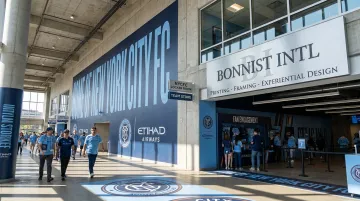
Sports Business Journal data shows 66% of consumers are more likely to purchase from companies that sponsor sports they follow — up from 59% in 2022. The physical environment is where sponsorship value becomes tangible for fans.
Hospitality, Corporate, and Retail Environments
Hotels, corporate offices, and senior living communities use experiential fabrication for environments that must perform every single day, not just for one event. The fabrication requirements shift accordingly: materials must withstand daily contact, finishes must survive cleaning cycles, and installations must integrate with how spaces are actually used.
Bonnist's MSocial Downtown NYC project is a useful illustration: custom Dreamscape wallpaper featuring Broadway, Wall Street, and the Charging Bull installed across 450+ guest rooms. That scale demands design consistency maintained across hundreds of rooms, with print quality calibrated for how hotel lighting interacts with the wall surface.
For corporate environments, Bonnist has delivered dimensional logos, branded glass graphics, direct-to-acrylic hallway installations, and backlit SEG systems for clients including NYCFC's headquarters and major sports and entertainment offices.
Trade Shows, Events, and Brand Activations
Unlike permanent installations, trade show fabrication is built around movement: portability, fast setup, high visual impact in a competitive floor environment, and often multi-city reuse.
The tension between custom hero builds and modular rental components is real. Custom builds deliver differentiation and brand precision; modular systems offer flexibility and cost efficiency at scale. The right answer depends on the brand's objectives, budget, and how many times the build needs to travel.
UFI's global exhibition data puts this in context: 32,000 exhibitions were held worldwide in 2024, with 4.7 million exhibiting companies competing for attention from 318 million visitors. In that environment, fabrication has to work at distance — grabbing attention from across a crowded floor before a visitor ever reads a word of copy.
How to Choose the Right Experiential Fabrication Partner
What Full-Service Actually Means
A true full-service partner manages concept, design, build, logistics, and installation under one roof. The coordination gaps that open up when these disciplines are split across multiple vendors are where cost overruns, timeline slippage, and design dilution happen.
When Bonnist designed and installed the TNF barrier covers for a nationally televised MetLife Stadium event, the same team that designed the graphics managed production and installation. There was no handoff where brand standards got reinterpreted, no scheduling dependency between a separate printer and a separate installer, no version-control error between the design file and what went on the wall.
Questions to Ask When Evaluating a Partner
- Do they understand the activation's goals, or just the build specs?
- Can they speak to materials, venue constraints, and operational use in the same conversation?
- Do they have experience across both permanent installations and event-based builds?
- Can they show relevant work in your industry — not just their best-looking projects?
The answers to those questions reveal whether a partner has real operational depth. Bonnist International's 33 years across sports, hospitality, corporate, and e-commerce means their team has encountered — and solved — the problems that catch less experienced fabricators off guard: material behavior in outdoor environments, brand standard compliance at scale, installation logistics at active venues with narrow load-in windows.
Timeline and Communication
Realistic timelines account for design review, material sourcing, production, finishing, graphic application, quality control, freight, and contingency. For complex shows, engaging a fabrication partner at least 6 months out is standard industry practice — for larger builds, 12 months is more appropriate. Last-minute changes create labor costs and sourcing problems that compound quickly.
When evaluating proposals, ask for a detailed production schedule — not just a delivery date. A partner who can walk you through each phase, flag dependencies, and identify contingencies before you sign is the one who will actually deliver on event day.
Frequently Asked Questions
What is the difference between exhibition design and exhibition fabrication?
Exhibition design covers concept, strategy, visual planning, and material selection. Fabrication is the physical engineering and build phase. The strongest outcomes happen when both are managed by the same partner — because design decisions made without production knowledge create problems that only appear during the build.
How long does the experiential exhibition fabrication process take?
Timelines vary by scope — smaller event builds typically run 4–8 weeks, while large permanent installations can take 3–6 months. Early partner involvement, fast client approvals, and realistic scheduling are the biggest factors in keeping projects on track.
What materials are commonly used in experiential exhibition fabrication?
Common materials include aluminum framing, acrylic, vinyl, weather-resistant fabric, printed mesh, Dreamscape wallpaper, direct-to-substrate prints (metal, PVC, canvas), and dimensional fabricated elements. Material choice depends on use case: permanent installs call for durability, touring builds need lightweight portability, and brand-forward activations demand premium finish.
How much does experiential exhibition fabrication cost?
Costs depend on scale, material selection, complexity, and build type. Modular systems cost less upfront and offer reuse value; fully custom builds carry higher production costs but deliver one-of-a-kind results. Getting a fabrication partner involved during budgeting — not after design is locked — prevents the most expensive surprises.
Can fabricated exhibition elements be reused or repurposed?
Yes — when designed for it from the start. Modular builds, durable finishes, and interchangeable graphic systems like SEG displays extend an asset's life across multiple events or seasons.
What industries benefit most from experiential exhibition fabrication?
Sports and entertainment, hospitality, corporate offices, retail, trade shows, and cultural institutions are the primary sectors. From arena branding and hotel lobbies to corporate headquarters and event activations, the common thread is a need to make a physical space do real work for a brand.